Mastering the Art of Sports Photography

Posted by: andy  :  Category: Photography

Author: Amy

For sports enthusiasts, there’s nothing more exciting than sports people playing their favourite game. The sight of the field, rink or golf course initiates the thrill and anticipation. This, combined with digital photography, can provide some amazing photographic opportunities. However it’s not a matter of point the camera at the person diving for the ball or puck and snapping away. It’s a lot more complicated than that.

celtic tattoosIn digital photography sports can be quite challenging. The sports people do not present an easy task of being photographed because of the amount of high movement. However, you can indeed achieve great sports digital photography. Most excellent sports digital photography requires good planning and execution.

Here are some exclusive tips for gaining fantastic sports shots in your digital photography.

First things first; know your digital camera. I recommend taking note and practicing first all the settings that sports photography needed. You may find yourself going for the faster shutter speed, increased ISO and burst mode. Let’s take a look at all these things on your digital camera and see how they can be applied to give you sensational sports photos.

High shutter speeds:
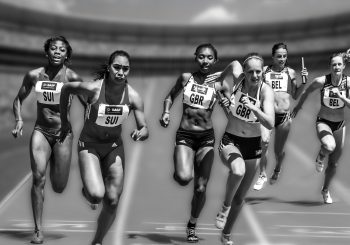
celtic tattoosAs with all moving objects, in order to capture the “frozen in time” look in digital photography a fast shutter speed is required. The faster the movement the fast the shutter speed will need to be. In digital photography the general consensus is that the shutter speed needs to be faster than that of the subject. For example if you have a sliding puck across ice and there is a someone about to take a dive for it then its necessary to quickly mentally assess how fast that person might be traveling at. If they are traveling at approximately 50 kilometers (approx 32 miles) per hour then you may find a very fast shutter speed is needed for this digital photo.

A very fast shutter speed in digital photography may be anything from 500th of a second or higher. For high speed movement you may want to consider an even faster shutter speed of 1000th of a second or something in that range.

Keep in mind that in digital photography a fast shutter speed works to reduce some of the light which is why a higher ISO is often necessary. (I’ll talk about that in a minute.) Usually a if a ball, such as a baseball going at around 145 kilometers an hour (90.09 miles per hour) a shutter speed of around 1/4000 will get you that “suspended ball in mid air” type of photo. For physical movement, such as someone leaping to catch a football, a shutter speed of 1/500 or over is a good place to start.

Now this is all very well if your scene if well lit. But what if you are taking your digital photography shots indoors at night and the light is not quite enough to provide enough light? In most instances, an indoor stadium at night time will be well lit, but that doesn’t always ensure good digital photos. In sports photography we need to understand that we can only control the artistic value and input of our digital photo and the control of the camera. We can’t control the lighting on the scene being such a public event. In digital photography sports photos we must realize that it’s going to be a challenge to begin with. So here are something’s you can in your digital sports photography to increase the amount of light.

celtic tattoosIf you have a light tool on your digital camera such as a histogram you can get a good idea of what the light levels are like on your sensor. With this handy tool you can adjust the ISO at the time of your pictures taking.

Increase your ISO: A high ISO in digital photography simply means the sensitivity to light that your digital camera has. In a nutshell the more ISO you have increased the image to, the less light the sensor needs. In sports photography an ISO of 400 or higher can work really well. The downside to this is that it does increase noise. To combat this you can use noise reduction software in the post editing process such as Noise Ninja or increase the LAB mode in the post editing process. Don’t be afraid to try a few shots at 400, 800 and even as high as 1600.

Burst mode:
In most sports digital photography this will be one of the settings you will turn to. Burst mode is also known as ‘continuous shooting’. This ‘continuous’ shooting mode allows you to get a sequence of shoots in succession. You can increase your chances of getting that ideal “split second perfect shot” that you might not be able to get by pre-emption or in normal shooting. This also works so beautifully if your digital camera has a painfully long lag time. I’ve used this so many times to get around the high lag my Sony Cyber shot has got. Some cameras have 3 frames per second and some go up to 12 frames per second. You simply select this mode and hold your finger on the shutter button and it will fire off as many shots in 1 second as it can.

Okay so I’ve been talking about your digital camera and the setting’s used for ideal sports digital photography, so what about any external equipment? If you have been thinking about this you’re spot on. You can take as much time with your settings but there’s not much point if you can’t get close to the action. There’s no point having a picture with perfect lighting and perfect action if the players are like dots on a sheet of paper. You need a good telephoto lens if you can’t get close up. A telephoto lens brings you closer because of its long distance capability. It will get you closer to the action but will need a faster shutter speed.

Many fantastic sports digital photos are taken with an emphasis on a very fast shutter speed, an f stop of around the 2.8 mark to blur the background and focus in on the subject. You may find that if your sportsperson is visually separated from the background and you take the digital photograph with a telephoto lens you’ll have a more shallow depth of field which can give you a more powerful feeling in your digital photo. You can get away with a good optical zoom lens, but you’ll get far better digital sports shots with a proper telephoto.

So what about the artistic side of sports photography with your digital camera? Plenty!

Pre-emption and Emotion is the key to good art.
When taking sports photography you probably won’t find a more public display of human emotion. The emotions of a sports person range from intense anticipation to extreme disappointment or extreme exhilaration. Pre-empting when these emotions take place is they key to getting artistic and impressive sports photos. This comes with practicing your digital photography.

SO much pressure is placed on our athletes, expecting them to perform so we can enjoy the show and the investors can enjoy their returns. This is another reason why I say to get a telephoto lens so you can capture the emotions on their faces and their body language. It makes for superb photography. For ideas on ice hockey, have a look at some ice hockey images that are great study tools.

Don’t just look at these digital photos, you must study them. Take on the attitude that studying sports photography will improve your digital sports photos ten fold. You will have a style to emulate and copy to start with then eventually, when you become confident, you’ll start to adopt your own style.

Happy shooting,
Amy Renfrey

Read more…

Celtic Tatoos And Celtic Tatoo Designs

Posted by: andy  :  Category: Tattooing

Author: Forbes Jarvis

The history of the Celts goes back for thousands of years. The Celtic people were recognized far and wide for their first-class skills in jewelry, artwork, arms and even metalworking. Regarded as ferocious battlers by the Romans, they were warriors from top to bottom. Throughout Ireland and the coastline of England you can see top-notch examples of Celtic artwork and Celtic crosses.

celtic tattoosOver time, modern Celtics developed and established symbols for themselves along the way. Celtic people in Northern America are known to display Celtic symbols to allow others to know that they have Celtic descent. Celtic symbols and knowledge have been passed down through the ages as their is little recognized written history retained today. Tatooing however, keeps Celtic traditions alive with the notorious Celtic cross and other common Celtic designs.

The bulk of Celtic tatoo designs and artwork come from Ireland where the history of the Celts is still very strong to this day. In Trinity College Dublin, Ireland you can see lots of documentation in manuscripts on Celtic symbols and heritage. Celtic tatooing reached its peak at about the same time that metalwork and stone work became highly desired.

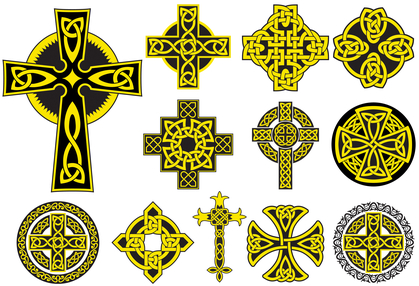
Celtic knot tatoos are amongst some of the most favorite and most common designs, sporting loops with no end that symbolise a ne’er ending cycle of death and rebirth. There are also Celtic animal tatoo designs as well, which are similar in design to the knot tatoos, although the cords in the design commonly terminate in feet, tails or heads. Unless the person having the tatoo requests an end to the Celtic design to make a spiral then the Celtic knot tatoo design is usually ne’er ending.

The proper meaning of the intricate knots found in Celtic tatoos resists all type of literal translation and its significance is found at a far deeper level. The complexity of the knots shows the persistent crossing of both physical and spiritual elements. The strands and their ne’er ending path are a favorite design for Celtic tatoos, symbolizing life, faith, and love. Used for heritage as well as emotional purposes the Celtic people have used these tatoos for many years.

People who come from a Celtic lineage, Scots, Irish or Welsh, commonly find a Celtic tatoo to be a good way to express their heritage pride. As well as giving tribute to their roots these tatoos help to re-establish pride in their long history. The tatoos arent simple to do, most taking several hours. Unlike other tatoo designs, Celtic tatoos are amongst the toughest designs in the world.

If you come from a Celtic ancestry and have decided to get a Celtic tatoo, the first thing to do is find an artist capable of doing the tatoo. These designs are very challenging and not all tatoo artists can carry them out. Its a good idea to find a tatoo artist who has a history in Celtic designs, as this will ensure the tatoo is made right. The artist who makes the tatoo needs to have an eye for detail and perfect line placement which is a skill that not all tatoo artists possess.

Read more…

Portrait Photography – What Should You Know

Posted by: andy  :  Category: Photography

Author: Adriana Bella

Portrait photography deals with pictures that capture a person or a group of people where the facial expressions, the mood of the moment and the special features of the personality of the subjects are highlighted. A portrait is a well composed image of a person or a group in a still position. Portraits generally are done to remember a date or a special occasion such as a wedding, a graduation, an anniversary or a reunion.

When it comes to portrait photography it can be done on the traditional lines or it can be done in a more innovative style which will express the mood of the moment with more eloquence. Striking portraits are remembered forever and treasured by many. Traditionally, the subjects in the portrait stare straight ahead at the camera which is positioned at eye level. However if you change the angle of the camera it will add a completely different aspect to the portrait. Shooting from up, down or up close can give an interesting perspective to the whole exercise.

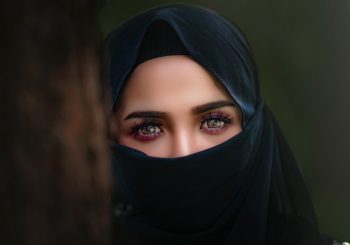
The most important feature in a portrait is the subject’s eyes. Looking straight down the lens is the most common and traditional way which is great for establishing a connection with the person looking at it. You can also have the subject looking off camera with the focus on something outside the frame. It is intriguing to the onlooker and created interest in the portrait. This has to be handled with care so as to keep the focus on the picture and not take it totally to the edge of it. The subject can be looking at something within the frame and this second point of interest can create its own story within the portrait.

The placement of the subject is also important to a portrait. Dead center or placing them with the use of the Rule of Thirds should be done as befits each picture that you are composing. There are no hard and fast rules about this and being imaginative will ensure a great portrait.

Another aspect of portrait photography is the lighting and how the different effects are used to highlight facial features, the body or the background. The possibilities are endless and need only be limited by your imagination. Side-lighting, backlighting and silhouetting the subject can work out perfectly for portraits. Partially obscured features at times can be very powerful in a portrait.

The traditional portrait shots have nothing to show in the way of originality. If the subject is good, the portrait is good. On the other hand if the portrait can made to look more than interesting it will really stand out. So, get the subject to do something that will involve activity and the photographs that you shoot at this time will show the subject in a more upbeat light. Less posing and more candid photographs will definitely be better. This works amazingly with children.

Focusing on a prop or a body part is another way of taking portraits. Composing the photograph can be a lot of fun when you are working with a prop or focusing on one body part. Obscuring a part of the subject in the portrait can be very powerful as this creates all sorts of emotion. One other method that can be used specially when working with children is to take a series of pictures that captures a certain movement and can be presented together as a series.

With all these tips for portrait taking you can refine your techniques even further with practice. So, experiment and learn the beat way that will suit you and make it your signature style.

Read more…

Fairy Tattoos: The Meaning and Beauty

Posted by: andy  :  Category: Tattooing

Author: Danny Kevant

Fairy tattoos are quite a popular choice for women, although they are chosen by men as well. This creature from mythology, literature, and television can be found on arms, the lower back, the shoulder, and other areas of the body. Many people choose a fairy tattoo simply because they enjoy the look of it, but these tattoos can also have a symbolic meaning that means something to the person that chooses it. No matter why you choose a fairy tattoo, you will find that they come in many different styles, colors, and designs to allow you to find the right one for your personal preferences.

The word “fairy” comes from the Latin word “fata,” which means fate. This brings to mind the underlying symbolization of destiny. This symbolism of a fairy tattoo can bring to mind passing through different stages of life or it can be a reminder of your youth. Fairies that are found in literature symbolize youthful exuberance and imagination and can mean that you want to keep the child-like qualities of imagination and wonder in your life. Whether you choose a fairy tattoo simply because of its underlying meaning or for its beauty, you will find that the most difficult process will be choosing the fairy that you like best.

Fairies like those that are seen in cartoons can be chosen or you may choose more lifelike fairies like those that are ready about in literature or mythology. You will be delighted with the many different styles of fairies that you can choose from. From flying fairies with their wings outstretched to sitting fairies and more, you can find the right fairy tattoo for your intended look on your body.

A fairy tattoo is often very detailed, which will mean that it will cost a little more than other designs and it will take somewhat longer. With the many different colors and lines that are part of making the fairy come to life on your skin, you will find that this tattoo will become a central focal point of your body to add life and beauty.

Making the decision to have a fairy tattoo applied to your body means that you are ready to take the time needed to make a significant impact upon your body and your life. The fun and whimsy of the fairy, along with the symbolism of youth and having a free spirit can come together to give you a tattoo that will express your own individuality and personality. The colors and style that are available in the selection of fairy tattoos will give your body just the right look.

Whether you choose a fairy tattoo as a reminder of innocence and child-like values or you choose it just for the beauty, you will find that a fairy tattoo can give your body great flair. From a small, intricate fairy tattoo to a larger, more detailed fairy tattoo, you will find that they can make an excellent addition to any part of your body to add a bit of personality and fun to your body.

Read more…

A complex world …

Posted by: andy  :  Category: Graphic Design

Digital Body Art

Posted by: andy  :  Category: Graphic Design

Body art in the age of virtualization …

How To Take Great Nature Photography

Posted by: mj  :  Category: Photography

Author: Robert
You see them all the time, fantastic photos that people have taken out in nature. So, how do they get pictures that great? and all of yours seem sort of plain? Here are a few tips to taking your own amazing nature photos: Study Remember in school how studying always got you better grades? Nature photography can work to some extent the same way. A few weeks before your vacation go to the library or bookstore and pick up a few books on nature photography. You don’t need a how to book; really what you’re looking for are collections of photos taken by nature photographers. Look through the book and take note of how the picture appears to have been taken. What do you like about it? What don’t you like about it? Looking at what other people have done can give you ideas when your out in the field trying to take pictures of your own. If you’re going on a trip to take pictures of a particular bird or animal, do your research on you topic. Know the habits of the animal, where you’re going to find it, and how to behave around it. You’ll be glad you did your studying when it comes time to take your pictures. Get a manual focus camera Sure your digital camera is fantastic, but if you truly want to take fantastic nature photographs, then you are going to need a camera with a manual focus. You can purchase digital cameras with a manual focus, but they will often cost you a pretty penny. If a digital SLR isn’t in your price range, seriously consider purchase a film SLR, you’ll be glad you did. The quality of your pictures will increase dramatically when you have the ability to change lenses, and rack the focus of your photos. Be patient: The best nature photographs are not the ones that you seek out, but the ones you stumble upon. Take a relaxing walk through the woods, or around a lake. Go boating, have fun in the outdoors. Just happen to have your camera with you when that perfect photo becomes available. Use a fast shutter Speed Nature is always changing. Make sure you catch the photo opportunity you’re looking for by having a camera with a fast shutter speed. The faster the shutter speeds the easier it will be for you to capture the moment, rather than miss it by a few seconds. Experiment A 10 year old can take a picture of a flower. Before you take the picture look around, and think about how you could make the photograph interesting. There are tons of things you can do that can dramatically enhance a nature photograph. Change the angle of your shot, change where your focus is. Maybe the flower isn’t in the foreground it is in the background of your photo. Don’t be afraid to take chances, the best photos are the ones that take what could have been an ordinary photo and make it extraordinary. A manual focus can help make your photos creative. A fast shutter speed can help you not miss a shot .The more creative you are with your pictures, the better they often are.

Read more…

Butterfly Tribal Tattoos

Posted by: mj  :  Category: Tattooing

Author: lucy watson

Butterfly tribal tattoos are now famous because it represents beauty, grace, refinement and fragility. There are different sizes and shapes of butterfly tattoo designs that are most loved by men and women. Butterfly tattoos also come in different color schemes that ranges from two-tones to colorful ones. Butterfly tattoos known for its unique, gorgeous and striking colors. Anyone who has a butterfly tattoo can be a head turner. For sure, you have seen or come across people with butterfly tattoos because people are going crazy about it.

Females choose butterfly tattoos because it symbolizes magic, metamorphosis, femininity and rebirth. Most women want their butterfly tattoos tattooed on ankles, shoulders, lower back area, upper back area, chest and armbands or just about anywhere. With the huge number of butterfly images available, it can take quite some time to choose the perfect butterfly tattoo design. People who have chosen butterfly tattoos may have gone through a transformative experience in life and want to express it in the form of butterflies.

Butterfly tattoos are so famous that even high profile celebrities are choosing it. Drew Barrymore has a butterfly tattoo under her navel. Britney Spears and Paris Hilton also have butterfly tattoos, which prove that butterfly tattoos are feminine tattoos. Nowadays, more and more women and even men are considering butterfly tattoos.

There are instances and traditions where butterflies are used to signify witches, abundance and divine love. If you wish to have a butterfly tattoo, choose the one that represents your personality. Aside from representing metamorphosis, butterfly tattoos also symbolize life, freedom or life after death. With all the different butterfly tattoo designs, you can absolutely choose one that reflects your personality.http://z.hubpages.com/u/261020_f520.jpg

Oftentimes, many people ask about the meaning of the butterfly. In some cultures, butterflies are recognized as a bringer of bad news or bad luck, while most people regard it as a symbol of new life or a new beginning. The earlier cultures believed that caterpillars die to give life to the butterfly, which made them assume that butterflies are bad luck. The latter focused on the rebirth of the caterpillar through the butterfly, which made the significance of the butterfly tattoo popular.

In Japanese culture, butterflies are known as the embodiment of one’s soul. In Chinese culture, the butterfly represents young love of a young heart. They believe that it is a symbol of grace and is associated with romanticism.

There are hundreds of tattoo designs such as Hawaiian tribal tattoos, tribal bear tattoos and so much more. However, why do most females prefer butterfly tattoos? Many females choose butterfly tattoo designs for its symbolism and specification while some people choose it because of its appearance, without ever knowing its representation. When you go to a tattoo parlor, you will find pre made designs of butterfly tattoos or you can have it customized. Butterfly tattoo is one of the most popular tattoo designs among females because it helps them to convey their feminine side. They can choose from small to big and bold tribal butterflies and still there are hundreds of designs to choose from.

Butterfly tattoos are often placed on the back. Other women put the butterfly tattoo on their ankles and wrist, or on their chest. However, there are no rules concerning where you want to put a tattoo. You can have it hidden under clothing if you are looking for a job because some companies have restrictions when hiring people with body art. Those who consider tattoo as a fashion trend show off their tattoos and make it visible for others to see. If you want to have a butterfly tattoo, make sure that you choose the best design that reflects your personality. Also, choose the perfect spot so that other people can appreciate it.

Read more…

What will a new president do for the arts?

Posted by: mj  :  Category: News

What would an Obama or McCain presidency do for the arts? Or will the new President’s hands be tied by the economic turmoil?

Michelle Obama recently took some relatives to see a revue at a Chicago theatre. Her husband did not accompany them. He’d already been to see a production of The Color Purple a few nights before, and anyway, it probably wasn’t appropriate: the show was called Between Barack and a Hard Place, and it made comedy of the last days of the primaries as Hillary Clinton fought vainly to knock down a man who, the show suggested, somehow managed to be black, white, Jewish, Latino, gay and, if needs must, a soccer mom too. He was something to everyone, and a liberal’s dream.

Liberals may or may not see their dreams come true tomorrow, but whether Obama or McCain is elected the 44th President of the United States, we might wonder what will unfold in the arts in the coming years. Won’t many writers and artists lose their muse – along with their enemy – when Bush disappears? We’ve had countless Bush-era movies, from Kimberly Peirce’s Stop-Loss to Oliver Stone’s W.; we’ve had books such as Nicholson Baker’s Bush-assassination novella Check-point and Curtis Sittenfeld’s roman à clef, American Wife, wondering at how Laura Bush turned from a liberal-leaning librarian into the Republican First Lady.

The past eight years have also produced a flourishing of political art, so much so that when a Los Angeles print publisher decided to produce a portfolio to be sold in aid of the Obama campaign it managed to extract designs from the likes of Jasper Johns, Richard Serra, Ellsworth Kelly and Ed Ruscha, and raised $3 million.

No, creative liberals won’t be sorry to see the back of Bush. But might an Obama presidency be just too much of a good thing? Happiness writes white, after all. John Lahr, the theatre critic of The New Yorker, says: “Historically, in times when there is change or hope, there is much more protest and wideranging opinion and activity in Broadway’s experimental theatres. People feel that someone will listen. What we’ve had for the past eight years is a kind of torpor and resignation, and that’s made theatre lose a lot of heat. I think there will be a lot more political, polemical stuff.”

He might have a point. The last time America pinned its hopes on a young president, John F. Kennedy, we saw the release of first albums by Joan Baez and Bob Dylan (the latter admittedly shortly before his election); Joseph Heller published Catch-22 and Ken Kesey put out One Flew Over the Cuckoo’s Nest. Visual art, meanwhile, turned away from the introversion and darkness of Abstract Expressionism and Pop Art flourished.

Of course, the 2008 election isn’t over yet, and the arts may have to look to John McCain for support. Would he be so different? Perhaps not. Coincidentally, both Obama and McCain have cited Ernest Hemingway’s 1940 novel For Whom the Bell Tolls as one of their favourite reads. In particular, they identified with the tough American hero, Robert Jordan, who hides out in caves during the Spanish Civil War, trying to wage guerrilla war on the fascists. “Robert Jordan was everything I ever wanted to be,” McCain once said.

But the similarities probably end there. McCain’s tastes in the arts aren’t well publicised, but Obama gave an interview to Rolling Stone in July in which he revealed a few of his desert island discs, and they aren’t likely to be the same as those of his septuagenarian opponent. Springsteen is a favourite, naturally: the Boss is a stalwart Democrat. Dylan he also likes. And he’s loved Stevie Wonder since his youth. More incongruously, he also says that he is on friendly terms with Jay-Z (though he hastens to add that he worries about his daughters listening to the rapper’s music).

Whatever it might do for the music business – probably not much, given the deep problems in the industry – Lahr has high hopes for an Obama presidency. “I think the very existence of Barack Obama says something profoundly hopeful about the American experiment. He himself has said it’s going to be slow. But I think what we’re going to see is a redefinition of the relationship between the individual and the community.” And Mike Goodridge, the US editor of Screen International, believes that an Obama presidency will make a difference in Hollywood. “I do think that in the past eight years American cinema has become a lot bleaker. There have been films such as No Country for Old Men and There Will Be Blood. The classic example is the Batman film The Dark Knight, which is a horrifying indictment of contemporary America.”

These are changes that may happen no matter what direction Obama steers the arts (assuming, again, that he wins). But he does have plans. Early on in his campaign, he convened a 33-strong National Arts Policy Committee, including the novelist Michael Chabon and the founder of the American Film Institute, George Stevens Jr. The team then issued a two-page document laying out Obama’s vision for the arts. There’s much talk of arts education, “to create complete human beings capable of leading successful and productive lives in a free society”. Obama wants an “artist corps” to go into schools and ginger up disadvantaged schoolchildren, and there’s talk of more money for the National Endowment for the Arts (NEA).

Over several months McCain was prodded to release a similar document, until finally, two weeks ago, he issued four sentences including a some ominous murmuring about “priorities” in spending: “Where local priorities allow, he believes investing in arts education can play a role in nurturing the creativity of expression so vital to the health of our cultural life.”

Of course, Obama’s talk of boosted funding may be moot now that America is facing recession. McCain’s “priorities” may have to be Obama’s as well. But even without an economic downturn, the arts could probably expect lean times under McCain, as he has a record of voting to abolish or cut funding for the NEA.

The NEA has proved divisive over the years: when commentators speak broadly of “the culture wars”, they refer to a battle of values between liberals and religious conservatives, yet some of the fiercest fighting in the 1990s was over the NEA’s funding for exhibits by artists such as Andreas Serrano and Robert Mapplethorpe. In 1992 funding for the NEA stood at $175 million; today, as a result of those conflicts, it’s $125 million. Bush did little to encourage the NEA during his presidency, though he made headlines in 2004 by increasing the budget by $18 million – the largest increase since 1984 – to fund American Masterpieces, a contentious scheme to promote canonical American culture.

In any case, it’s fair to suppose that economic pressures will trump any kind of political influence in shaping the next few years in the American arts. Some have already been speculating about it. New York magazine recently had fun predicting the state of the arts under this “New Great Depression”: maybe artists will revisit Dorothea Lange’s 1936 photo Migrant Mother to record the fates of migrant bankers; perhaps R.Kelly will resurrect the Gershwin classic as Porgy and Bitches; or Gone with the Wind will be reshot in hipster Brooklyn, where a

“battle of the bands” will replace the Civil War setting, and Brett will say to Scarlett: “Frankly, O’Hara, whatever.”

More seriously, Lahr predicts hard times on Broadway. “In times of fear, people don’t want to think, so you tend to get musicals, spectacle, documentary. It tends to lower the literary quality of work. And producers aren’t going to take risks with unknown products.” Similarly, Goodridge sees poor fare at the cinema. “Film is the cheapest form of entertainment and it has ridden out recessions repeatedly, but Hollywood as a corporate society has suffered terribly over the past year; there have been massive lay-offs.” And that is going to have an effect. “Mamma Mia! is about as mindless as you can get in terms of escapist entertainment, and look how successful that’s been. Whereas the failure of the Iraq war films has just made the studios more keenly aware that they just have to produce blockbusters.”

And in the contemporary art market the balloon is ripe to burst. The New York art critic Jerry Saltz last week predicted casualties: “Forty to fifty New York galleries will close… An art magazine will cease publication… A major art fair will call it quits… Museums will cancel shows.” Nevertheless, he thinks that some of this might be a good thing. Too many artists have been getting away with murder.

Even the New York-based Japanese artist Takashi Murakami agrees – and he hasn’t exactly missed out on the highcotton years. “Maybe we can have a conversation about the concepts,” he says. Earlier this month the comedian Stephen Colbert wondered if things might get so bad on the high street that some American shoppers may have to stop shopping, visit libraries and borrow books. It would be awful, it would be un-American, but if things get tough, they are ready.

BURNING BUSH – THE LEGACY OF W

Roseanne Barr, comedian I think the world is about to change for the better. Bush ruined it and now people have no choice but to try to put it back together. He’s like Humpty Dumpty.

Edward Albee, playwright I see no cultural legacy from Bush. After 9/11 writers were bombarded with requests to write about the event, and the great majority of us said: “Something’s going to come out of this, probably, but let’s wait until it happens; hysterical journalism doesn’t really help much.” I’m more interested in the deep malaise in this country that has permitted us to have eight years of George W. Bush.

Brian Dennehy, actor There’s been a tremendous amount of what I guess you’d call outraged art, an anti-Bush industry on hand ready to fulminate about how disastrous he is. But the conclusions are often more complicated than the left has wanted to hear.

Tony Kushner, playwright Bush is a person, as far as I can tell, without culture, though there was some weird moment when he was inviting philosophers and historians to the White House for late-night conversations about the meaning of life and how he’d be remembered. Most of those who went were very closed-mouthed about it.

Tim Robbins, actor, director I said when Bush was re-elected that it was a good day for satirists and punk rockers, and I do think that when things get this bad that it leads to stronger art. But at the end of the day I’d rather see civil liberties than kick-ass art.

Oskar Eustis, artistic director, Public Theatre, New York The Bush administration has been disastrous. The kind of isolationism he has promoted has tremendously increased the difficulty of the cultural flow of traffic: it’s much harder than it once was to get foreign nationals into the United States. The other thing that can’t be underestimated is the time bomb he has left in terms of the deficit: the economic crisis that is just beginning to spread its toxin is going to leave this poison where the arts are going to be one of the first places that suffer.

Justin Bond. writer, performer, and drag artist I’ve never really gone after George W. Bush as a target because I felt he was too easy. It’s the forces behind him of fundamentalist religion and of greed – the power structure behind the neocon movement – that has made me really angry. It’s become very clear how damaging that entire agenda has become to the country and to the world.

Margo Lion, Broadway producer and Obama volunteer I probably don’t think George W. Bush is a bad guy, though I have other feelings about other people. I just feel so disheartened by what’s happened in the last eight years. I’m sure this all sounds so touchy-feely, but when Barack came on the scene it was almost as if someone was watching over us. He always said, “If I make a good enough argument to the American people, I believe they’re a good people and I can win.” All I want to say to him now is, “God bless you; this is one big job.”

Wallace Shawn, actor and playwright I grew up in a country where my parents thought of Americans as benevolent people who were greeted joyfully by Europeans when they arrived in their jeeps at the end of World War II. Now we live in a time where you have to say that politicians openly proclaim the law of viciousness and trampling over people they didn’t like: Bush has openly mocked law and proclaimed a certain pleasure in sadism and exulted in holding prisoners and mistreating and torturing them, really. Of course this affects one emotionally: my emotional life has been very strongly affected by the fact that Bush was president and my writing life is affected by my emotional life.

Christopher Shinn, playwright The majority of my career has taken place in the Bush era so I’ve really known no other time as an artist. If anything strikes me, it’s the continuity between Clinton and Bush having to do with the relative strength of the economy, and the change is not that Bush is leaving but that the economic crisis and the coming recession might be severe enough to shake things up.

If anything the Bush era inspired less political art in that there was such a monolithic opinion that Bush was bad, which in fact opened the way for apolitical plays to thrive; it would be rude to name names. Many of the more notable plays of the time really have little to do with social or political issues. I just think it’s really important that those of us who are creating political art are doing more than dividing the world into black and white, the good guys and the bad guys. It’s been very clear, for instance, that Obama has been running to the right of McCain on the issue of Pakistan, for example, and equally clear that the left is going to have to ask tough questions about its candidate, which I don’t think we’ve done yet. These are the kinds of contradictions I am interested in exploring.

by MATT WOLF

[Source: http://entertainment.timesonline.co.uk/tol/arts_and_entertainment/visual_arts/article5056613.ece]

Let Instinct Guide You: Nude and Portrait Photography

Posted by: mj  :  Category: Photography

Author: Lou Lynch

Different imagery appeals to different photographers. From landscape photographers to artistic nude photographers and everyone in between, the photography world is a cornucopia of different styles, processes, and techniques.
For amateur photographers, it is hard to know what you will eventually want to shoot as you’ve yet to experience the many different paths one can take, so amateurs are usually generalists – they’ll shoot anything and everything. As you progress through your budding career, you’ll quickly learn what you love to shoot and what you hate to shoot and you’ll develop your very own style.

Here is a summary of two different types of popular photography today:

Nude Photography

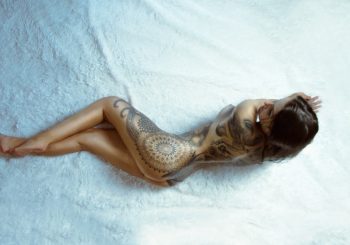
Very rewarding and artistic, capturing the nude has fascinated artists from all walks of life. Photographers can capture such glorious images that play with light and shadow, and that push the boundaries of everyday living. The limitless potential and taboo aura makes artistic nude photography a favourite among professional and amateur photographers alike. Yet, it takes great skill to create a beautiful nude portrait, and the technique cannot easily be taught. Instinct must guide the photographer beyond the basic principles of composition into a realm where there are no rules.

Nude photography has many cousins in the erotic photography sphere; boudoir photography is one of them. Boudoir photography pushes our limits and incorporates much fantasy and eroticism into a photograph.

One of the main jobs of an artistic nude photographer is to control lighting contrast and ensure that subtle transitions in tone guide our perception of the human form. There are great masters of this art form in all cities of the world, but many settle in Los Angeles, New York, Toronto and Paris. Toronto photographers, for instance, may have a different style than Los Angeles photographers because of the different climate – this plays a role in where the setting for a nude photograph will take place.

Portrait Photography

Photographing people is entrenched in the very fabric of our humanity. Since the invention of the camera, we have been fascinated by seeing ourselves outside ourselves, so to speak. Amateur photographers the world over snap images all the time, but it is the professional photographer that truly understands when you photograph a fellow human being, you must capture their spirit.

The purpose of portrait photography is to reveal in the inner humanness of your subject. What is it that makes them special, unique and interesting? The most poised and accomplished portrait photographers know that revealing this is the secret for the success of any image. You want to look at a portrait and ask “What are they telling me?” and you should be able to draw clues from the subtleties of the photograph’s composition. This is what makes a portrait stand out from a snap shot. The portrait attempts to reveal the inner character of the person in front of the camera. Many photographers spend their entire lives trying to capture the truth in their images. Travel to any major city and you’ll find some of the best portrait photographers around. Toronto photographers and New York photographers and Paris Photographers all try to reveal the secret their sitter is hiding behind the veil.

Article Source: http://www.articlesbase.com/art-articles/let-instinct-guide-you-nude-photography-and-portrait-photography-616805.html

About the Author:

Katie Refling is Toronto Photographer and in this article shares her views on Headshots Toronto