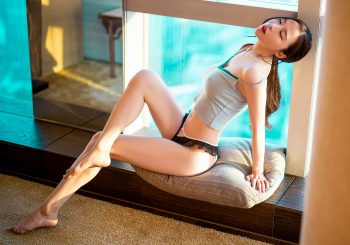
Let Instinct Guide You: Nude and Portrait Photography

Posted by: mj  :  Category: Photography

Author: Lou Lynch

Different imagery appeals to different photographers. From landscape photographers to artistic nude photographers and everyone in between, the photography world is a cornucopia of different styles, processes, and techniques.
For amateur photographers, it is hard to know what you will eventually want to shoot as you’ve yet to experience the many different paths one can take, so amateurs are usually generalists – they’ll shoot anything and everything. As you progress through your budding career, you’ll quickly learn what you love to shoot and what you hate to shoot and you’ll develop your very own style.

Here is a summary of two different types of popular photography today:

Nude Photography

Very rewarding and artistic, capturing the nude has fascinated artists from all walks of life. Photographers can capture such glorious images that play with light and shadow, and that push the boundaries of everyday living. The limitless potential and taboo aura makes artistic nude photography a favourite among professional and amateur photographers alike. Yet, it takes great skill to create a beautiful nude portrait, and the technique cannot easily be taught. Instinct must guide the photographer beyond the basic principles of composition into a realm where there are no rules.

Nude photography has many cousins in the erotic photography sphere; boudoir photography is one of them. Boudoir photography pushes our limits and incorporates much fantasy and eroticism into a photograph.

One of the main jobs of an artistic nude photographer is to control lighting contrast and ensure that subtle transitions in tone guide our perception of the human form. There are great masters of this art form in all cities of the world, but many settle in Los Angeles, New York, Toronto and Paris. Toronto photographers, for instance, may have a different style than Los Angeles photographers because of the different climate – this plays a role in where the setting for a nude photograph will take place.

Portrait Photography

Photographing people is entrenched in the very fabric of our humanity. Since the invention of the camera, we have been fascinated by seeing ourselves outside ourselves, so to speak. Amateur photographers the world over snap images all the time, but it is the professional photographer that truly understands when you photograph a fellow human being, you must capture their spirit.

The purpose of portrait photography is to reveal in the inner humanness of your subject. What is it that makes them special, unique and interesting? The most poised and accomplished portrait photographers know that revealing this is the secret for the success of any image. You want to look at a portrait and ask “What are they telling me?” and you should be able to draw clues from the subtleties of the photograph’s composition. This is what makes a portrait stand out from a snap shot. The portrait attempts to reveal the inner character of the person in front of the camera. Many photographers spend their entire lives trying to capture the truth in their images. Travel to any major city and you’ll find some of the best portrait photographers around. Toronto photographers and New York photographers and Paris Photographers all try to reveal the secret their sitter is hiding behind the veil.

Article Source: http://www.articlesbase.com/art-articles/let-instinct-guide-you-nude-photography-and-portrait-photography-616805.html

About the Author:

Katie Refling is Toronto Photographer and in this article shares her views on Headshots Toronto

Pablo Picasso – One of the Worlds Most Famous Artists

Posted by: mj  :  Category: Drawing, Painting

Author: George Baxter

“There is no abstract art. You must always start with something. Afterward you can remove all traces of reality”. These were the words spoken by child prodigy Pablo Picasso – a Spanish painter, sculptor, graphic artist and ceramist who is considered by many to be the 20th century’s best art genius. No other artist of the modern period achieved the range of influence which Picasso reached over twentieth century abstract art. Picasso is in all probability best known for the part he played in pioneering and developing Cubism. Picasso entered into marriage twice and was the father of four children, three of which were born outside wedlock.

Born in Malaga, Spain on October 25, 1881, Pablo Picasso was the son of a painter by the name of Don José Ruiz Blasco. His mother’s name was Doña Maria Picasso y Lopez. From a young age Picasso showed an exceptional talent for drawing. His father, realizing Picasso’s outstanding talent handed over his palette and brushes to him and swore to never again paint as long as he lived. In 1895 Picasso’s family moved to Barcelona. Picasso – aged 14 – took only one day to pass the entrance examination for the higher class at the Barcelona School of Fine Arts.

Picasso had his first exhibition in 1900 in Barcelona. That same year, he went to Paris – where he settled in 1904 – and his creativity flourished. The period from 1900 to 1904 was known as his ‘Blue Period’. This period of Picasso’s art is characterized by the utilization of different blue shades. These shades underlined the miserable lives of his subjects; he portrayed beggars, prostitutes and alcoholics. The suicide of Carlos Casagemas, Picasso’s friend; and Picasso’s trip to Spain were the stimuli for his Blue Period. His abstract art works during this period included a portrait of Cassagemas after his death, The Frugal Repast (1904) and Portrait of Soler.

The years 1905 and 1906 saw Picasso shifting from the dark Blue Period to a cheery Rose Period, featuring pink and orange colours and with circus-associated subjects. Most of Picasso’s abstract art paintings during the Rose Period were influenced by the affectionate relationship he had with Fernande Olivier. Following numerous variations and studies, Picasso came out with ‘Les demoiselles d’Avignon’, – his first Cubist work in 1907. African artefacts were the inspiration for this painting which critics considered to be only a copy of African ethnic art. In the following years Picasso along with his new artist friend Georges Braque explored the prospects of Cubism.

Picasso’s abstract art phase from 1908 to 1911 was an Analytic Cubism phase. He and Braque created landscape Cubist paintings using neutral colours and monochromatic browns. The Analytic Cubism phase was followed by the Synthetic Cubism phase which lasted up to 1919. Picasso produced his most celebrated art work ‘Guernica’ during his surrealist and neoclassical phase. For many, this large work done while the Spanish Civil War was in progress; was a depiction of the inhumanity, despair and violence of war.

Picasso was one of the participants in a sculpture exhibition held in 1949, at the Philadelphia Museum of Art. His final works incorporated a variety of styles and were more expressive and colourful. Pablo Picasso passed away, aged 91, on the 8th of April, 1973 in Mougins, France.

As with many of the artists of the period Pablo Picasso created his art on artists canvases made from linen. Create your own art and let your creativeness flow with the new exclusive wide range of canvases from http://www.artistsstretchedcanvas.co.uk and http://www.artistsblankcanvas.co.uk.

Article Source: http://www.articlesbase.com/art-articles/pablo-picasso-one-of-the-worlds-most-famous-artists-615621.html

About the Author:

George Baxter is a retired art teacher with over 25 years experience who takes great interest in the history of the pioneers of The Abstract Expressionism Movement and learning and teaching traditional art skills and techniques specifically in relation to oil painting and fine arts.

When the New Saatchi Gallery is Essential Viewing

Posted by: mj  :  Category: Painting

Author: Jane Hannington

The new Saatchi Gallery just off the trendy Kings Road in Chelsea is already becoming a “must see” destination for visitors to London.

Admission is free to this amazing display of contemporary art.

The imposing location at the Duke of York HQ is just a few minutes walk down Kings Road from Sloane Square underground station and just 10 minutes walk from Victoria station.

Currently on display is a stunning exhibition of pictures, sculptures and installations by 24 of China’s leading artists – mainly based in Beijing. Many of these innovative works are stunning and thought provoking and even humorous.

Of note are some very realistic wax sculptures including one of an elderly angel lying prone with realistic fleshy “poultry-looking” wings which appear to be almost real. There are some witty paintings of Chairman Mao in unlikely locations including Venice (enjoying the sun with a bikini-clad companion), the Yalta Conference, the McCarthy hearings and riding in an open carriage with the Queen Mother.

In the basement is a hypnotic installation of life-size elderly state leaders, past and present, including Archbishop Makarios and Fidel Castro. These ancient characters are displayed in their declining years slumped in motorised wheelchairs. They move and collide randomly in the space providing a strangely mesmerising display.

Outside on the plaza is an open air café and on Saturdays in the plaza there is Chelsea market – a veritable bustling melee of stalls cooking and selling delicacies from many of the major cuisines of the world. The aroma from the wonderful food permeates the square where you can buy delicious produce such as French cheeses, juices, Middle Eastern, Thai and Spanish food, as well as organic meat, whole food wraps and good Olde English pies.

A trip to London is not complete without a Saturday stroll in this bustling area of London. You can shop in the eclectic collection of designer boutiques, enjoy good food and complete your day with a memorable visit to the excellent and unforgettable Saatchi Gallery.

Article Source: http://www.articlesbase.com/art-articles/when-in-london-the-new-saatchi-gallery-is-essential-viewing-618827.html

About the Author:

Jane Hannington is Marketing Manager of Go City Apartments providing self-catering accommodation for visitors to London. Telephone 00 44 (0)208 421 5411 or visit www.gocityapartments.com